The problem
Dispatch ran on three spreadsheets, a whiteboard, and one person who knew how all of it fit together. Every route change meant re-keying the same information in three places, and the schedule was only ever accurate in someone’s head. Off-the-shelf fleet software assumed a depot model this company had deliberately moved away from.
The approach
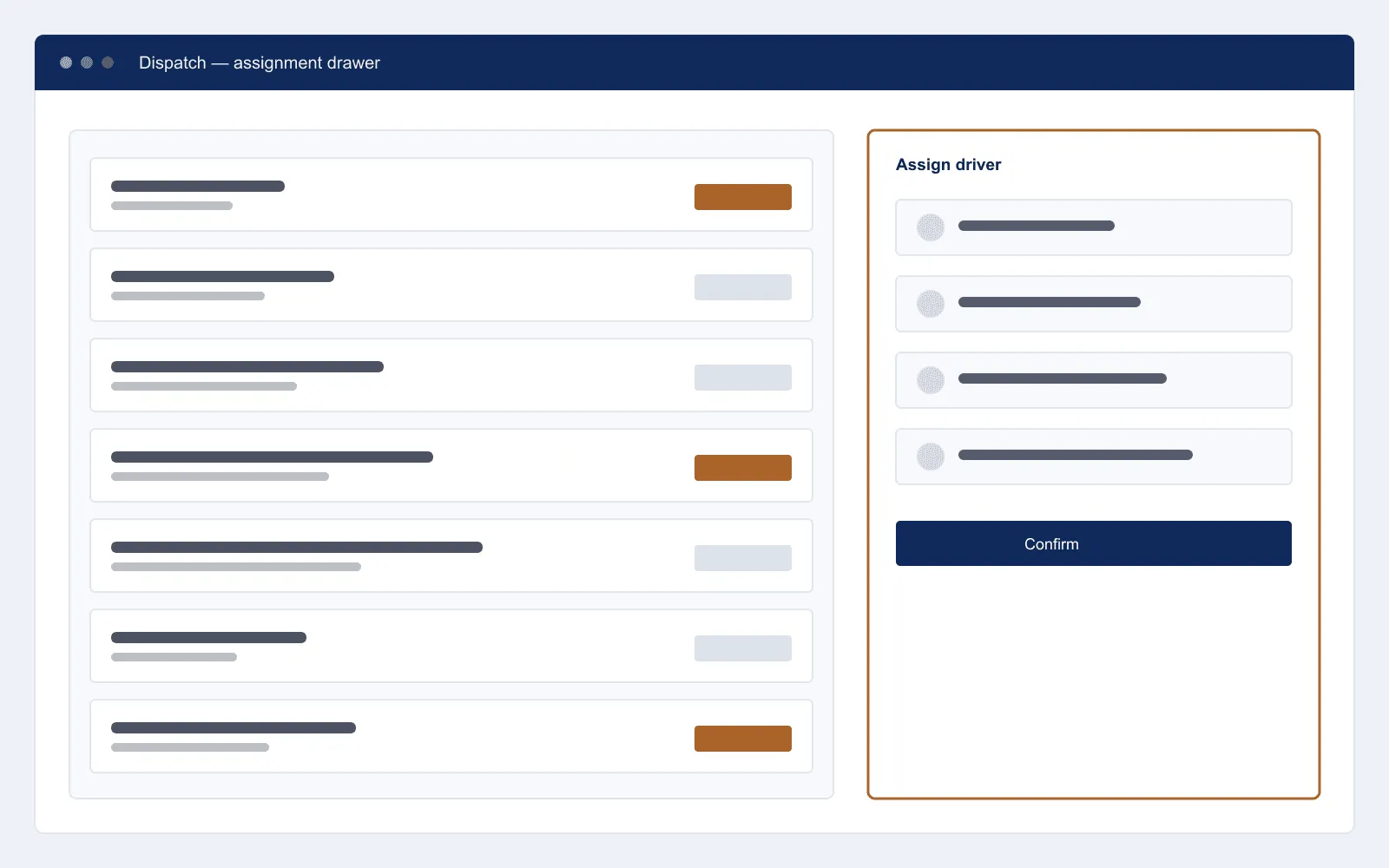
We spent the first week riding along and watching dispatch work, not gathering requirements in a conference room. The whiteboard turned out to encode a prioritization rule nobody had written down — that rule became the core of the scheduling logic rather than something the software fought.
We built the routing model first and put it in front of dispatchers while it was still ugly, so the rules were argued about early instead of after launch.
The result
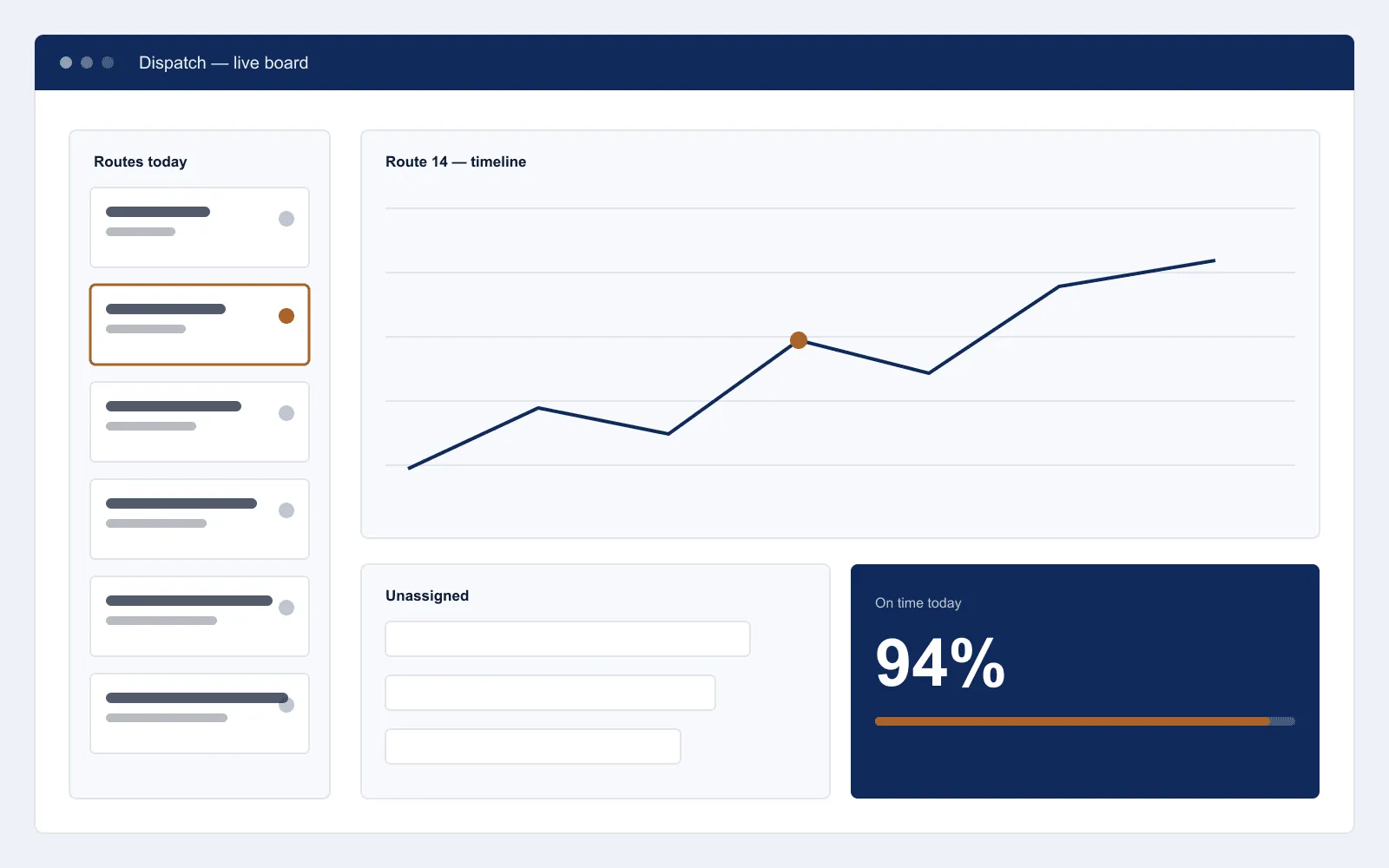
One system that dispatchers open at the start of a shift and trust for the whole day. Route changes propagate once. The person who held it all in their head took a vacation for the first time in two years.